
Innovation
K DValley - Geopolymer Tiles, Vitrified Tiles
K DValley's Innovation
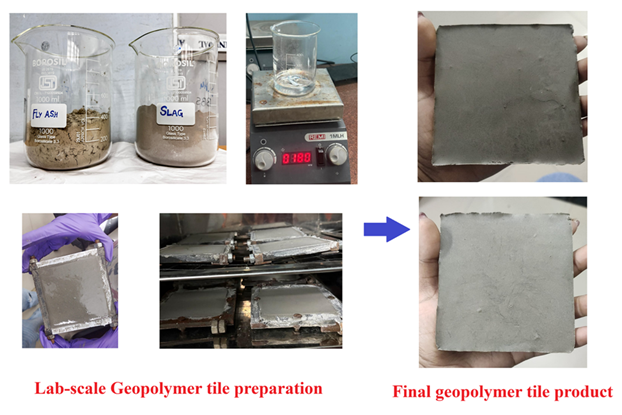
Geopolymer as a cement-free concrete material: Geopolymer Tiles and Blocks
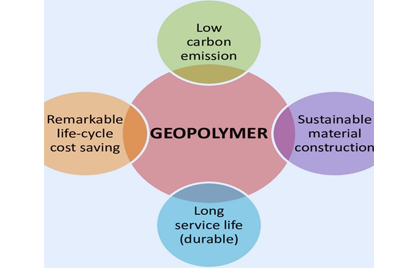
Geopolymer is an inorganic polymer synthesized using alumina-silicate source materials like flyash and blast furnace slag at room temperature or low-temperature curing. Geopolymer technology has become well-established for construction applications similar to ordinary Portland cement (OPC). The OPC is partially or totally replaced by geopolymer binder, offering more technical and environmental advantages such as higher resistance to hostile chemicals and fire with 80-90% reduction in CO2 emissions. In geopolymer materials, aluminium and silicon are key chemical components, instead of silicon and calcium. In OPC production, naturally available carbonates are made active to react, resulting in high CO2 release, whereas a high quantity of aluminium present in flyash wastes does not need to be processed, making geopolymer a more eco-friendly construction material.
Our scientists are involved in developing low-carbon geopolymer tiles and construction blocks on a commercial scale by utilising Indian flyash and other industrial by-product wastes for the first time in the country.
The K DValley's R&D unit is engaged in rigorous scientific activities, such as preparing, testing, characterizing, quality analysis, and product improvements of geopolymer tiles.
History of Geopolymer
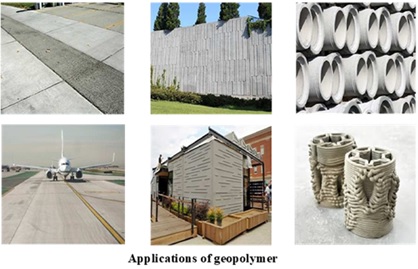
Geopolymers are inorganic and ceramic-like materials synthesised by the chemical reaction of aluminosilicate minerals with an alkaline or acidic solution to create a long-lasting, non-crystalline or semi-crystalline network. Since the 1970s, under alkali-activated aluminosilicate binder materials, geopolymers have appeared to be sustainable alternatives to traditional cement. The term "Geopolymer" was proposed by French material scientist Prof. Joseph Davidovits in 1978.
Early research and development of alkali-activated aluminosilicate materials solved environmental issues and expanded the range of uses in building, fire-resistant materials, and even archaeological theories (e.g., the potential use of geopolymer-like methods in ancient monument construction).
(i) Traditional Ceramics: The traditional ceramic industry continued to flourish in various cultures, including China, Greece, Persia, and Japan, creating porcelain, tableware, and tiles.
(ii) Advanced Ceramics: From the late 19th century onwards, new, advanced ceramic materials like alumina, zirconia, and silicon carbide were developed. Modern Applications: These advanced ceramics possess exceptional properties, enabling them to be used in cutting-edge technologies, such as electrical insulation, automotive parts, electronic devices, and biomedical applications like hip replacements.
High-strength flyash-based ceramic materials
Ceramics are known to be inorganic materials that are made of both metallic and non-metallic elements. There are five primary raw materials used in ceramic material production, i.e., clay, feldspar, quartz, kaolin, and talc, depending on the properties of the products. The manufacturing process of ceramics is based on high-temperature firing (~1400 ºC), which is more energy-intensive than geopolymer materials. K DValley aims to reduce such high energy requirements in each stage of ceramic material production.
Here, K DValley's R&D unit offers innovative technologies to upgrade the chemical-mechanical properties of ceramic tiles by using several industrial by-products, such as flyash and blast furnace slag, in addition to existing technology and raw materials.
The history of ceramic materials
The history of ceramic materials spans from 29,000–25,000 BC, with early figurines and figurines to modern advanced ceramics, which are crucial in various technologies. Early ceramics were utilitarian, used for storing food and grain, but evolved through innovations like the potter's wheel and the discovery of glazes. Significant cultural developments include the ancient Greek, Chinese, and Japanese traditions, with advanced ceramics like alumina and zirconia finding applications in everything from electronics to biomedical devices today.
- Ancient Origins (29,000–8,000 BC): (i) Figurines: The earliest ceramic objects, dating back to around 29,000–25,000 BC, are found as figurines and slabs, not functional pottery. (ii) Early Pottery: The first functional pottery, used for storing food and grain, appeared around 9,000 BC. (iii) Glazes: Glazes, which are colored coatings on ceramics, were discovered in ancient Egypt between 5,000 and 8,000 BC. (iv) Cultural Significance: Ceramics were a fundamental part of early civilizations, reflecting their culture and daily lives.
- Technological Advancements and Cultural Exchange (8,000 BC – 1500 BC): (i) The Wheel: The invention of the wheel made the production of ceramic pottery much more efficient and easier. (ii) Cultural Exchange: Ancient Egyptians imported pottery from other regions, and early ceramic production and trade routes connected cultures. (iii) Development of Specialized Kilns: Techniques for firing ceramics improved over time, with the introduction of more specialized kilns.
- From Traditional to Advanced Ceramics(i) Traditional Ceramics: The traditional ceramic industry continued to flourish in various cultures, including China, Greece, Persia, and Japan, creating porcelain, tableware, and tiles. (ii) Advanced Ceramics: From the late 19th century onwards, new, advanced ceramic materials like alumina, zirconia, and silicon carbide were developed.
- Modern Applications: These advanced ceramics possess exceptional properties, enabling them to be used in cutting-edge technologies, such as electrical insulation, automotive parts, electronic devices, and biomedical applications like hip replacements.
High-strength ceramic materials – Ceramic Tiles and Home decor Items
Ceramics are known to be inorganic materials that are made of both metallic and non-metallic elements. There are five primary raw materials used in ceramic material production, i.e., clay, feldspar, quartz, kaolin, and talc, depending on the properties of the products. The manufacturing process of ceramics is based on high-temperature firing (~1400 ºC), which is more energy-intensive than geopolymer materials. K DValley aims to reduce such high energy requirements in each stage of ceramic material production.
Here, K DValley's R&D unit offers innovative technologies to upgrade the chemical-mechanical properties of ceramic tiles by using several industrial by-products, such as flyash and blast furnace slag, in addition to existing technology and raw materials.
Resource recovery: A foremost extraction technology of metal and metal oxides from fly ash waste
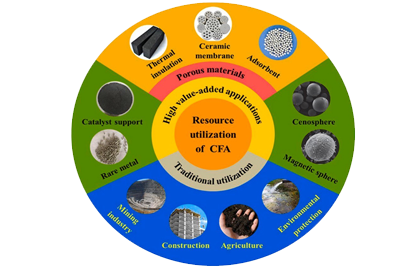
Indian coal flyash is highly enriched with metal oxides (silicon dioxide (SiO2), titanium dioxide (TiO2), and aluminium oxide (Al2O3), and the recovery technology of these components is still on a laboratory scale in India. Our research wing in K DValley has initiated a unique sustainable method for commercially extracting metal from CFA and a metal (Si and Ti) recovery process from extracted metal oxides.